
Overview
I worked as an Aerospace Research Intern within the Structures and Materials Performance group at the National Research Council of Canada.
My role spanned multiple independent research projects, each conducted under different supervisors and focused on distinct aspects of aerospace materials, experimental mechanics, and structural modeling.
The position combined hands-on experimental testing, coordination of complex research logistics, and publication-quality data analysis and documentation, supporting long-term research initiatives in aircraft structural performance and digital twin development.
Composite Impact Testing of Carbon Fiber Laminates
This research project focused on the impact behavior of carbon fiber composite panels with controlled layup sequences and impact configurations. The objective was to characterize damage initiation and progression under impact loading and to generate experimentally validated datasets suitable for publication.
I supported the entire experimental lifecycle, from specimen preparation to post-test inspection and reporting.
Key Contributions
- Coordinated logistics for composite specimen preparation, machining, fabrication, and testing
- Managed large experimental test matrices involving multiple layup sequences and impact conditions
- Conducted and documented impact testing on composite plates
- Supported non-destructive inspection (NDI) to assess post-impact damage
- Maintained detailed specimen tracking and test records using structured Excel workflows
- Performed data processing, visualization, and result summarization
- Contributed to the writing of a published technical research paper
- Collaborated closely with researchers, technicians, and external suppliers
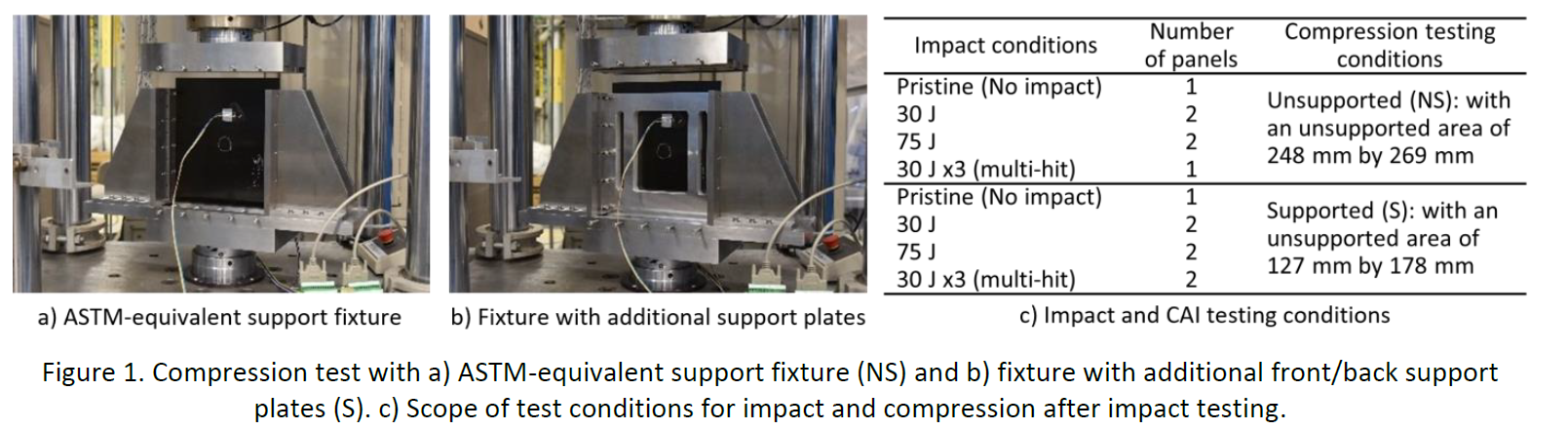
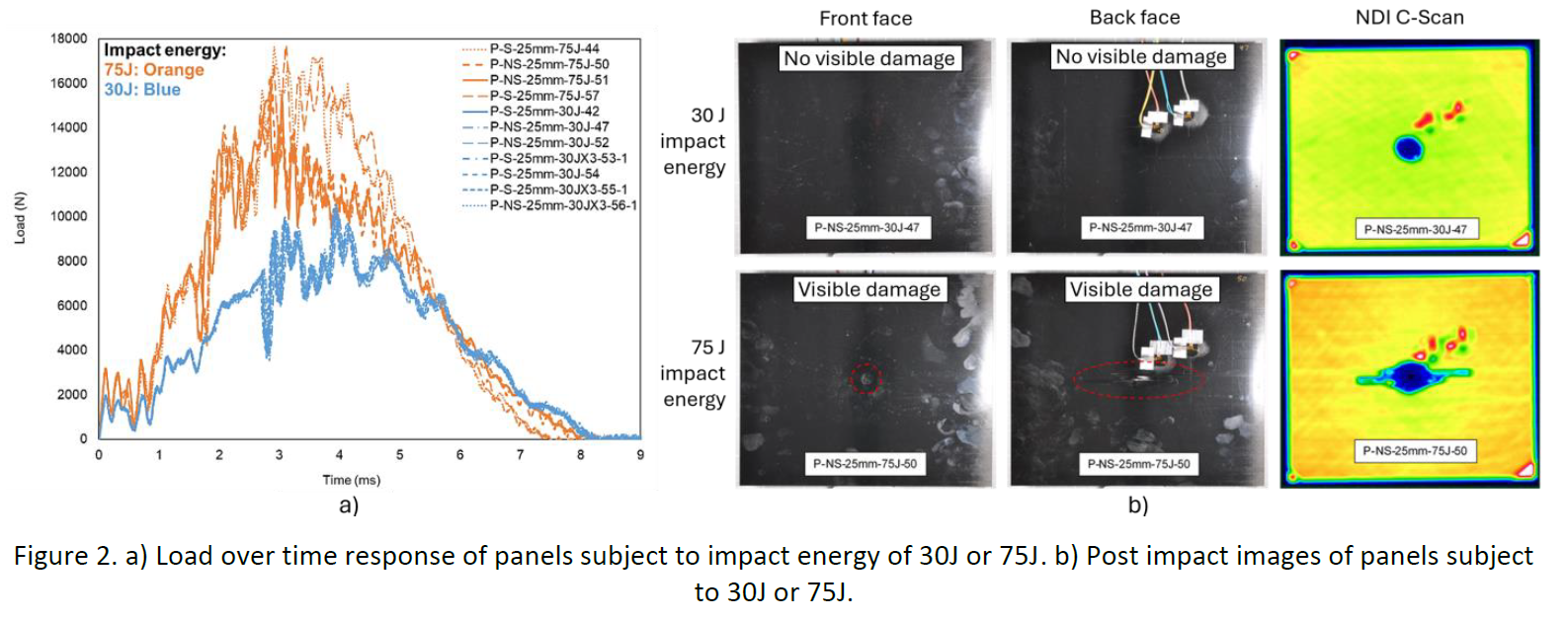
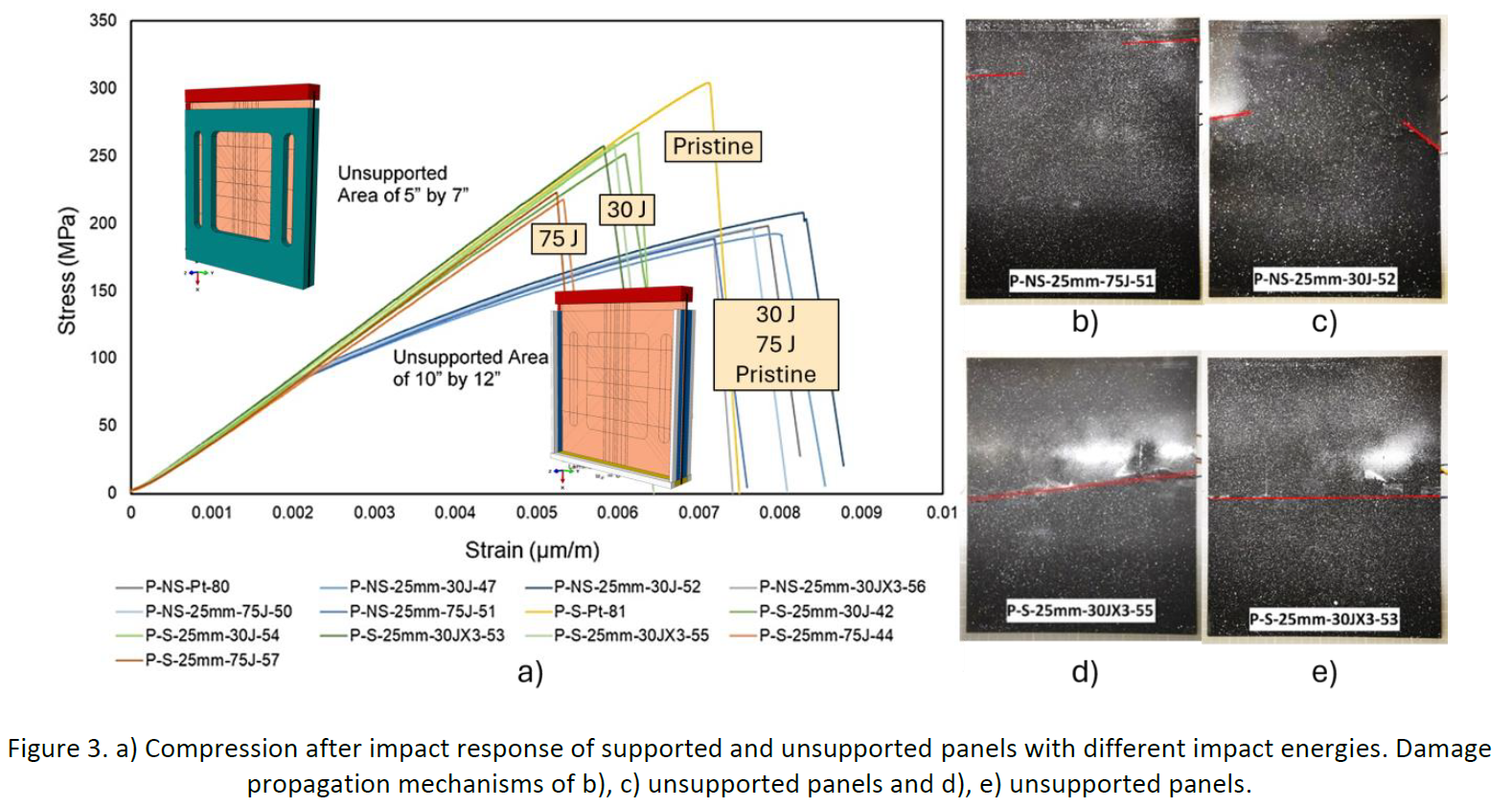
Selected figures reproduced from: Understanding the Effect of Global Buckling on Composites Damage Tolerance, CANCOM 2024.
High-Temperature Fatigue Testing of Metallic Alloys
In a separate research stream, I supported high-temperature fatigue testing of metallic alloys used in aerospace structures. This work was highly hands-on and focused on experimental setup, instrumentation, and monitoring of fatigue and crack growth behavior.
Key Contributions
- Assisted with test setup and execution on MTS mechanical testing systems
- Instrumented specimens using microwelding and strain gauge installation
- Conducted low-cycle fatigue (LCF) testing under controlled conditions
- Used optical microscopy to measure and track crack growth
- Generated and reviewed crack growth reports using macro-enabled Excel tools
- Supported data quality assurance and experimental repeatability
Aircraft Structure Reverse Engineering for Digital Twin Support
This project involved the reverse engineering of a helicopter rotor blade cross-section to support digital twin research efforts. The goal was to create an accurate geometric and material representation suitable for downstream structural analysis.
While I did not develop the digital twin itself, my work provided validated structural inputs for digital twin modeling efforts.
Key Contributions
- Digitized and reconstructed rotor blade cross-sections
- Created detailed CAD models using Autodesk Inventor
- Assigned material properties, meshing and prepared analysis-ready models in ANSYS
- Exported structural data to NASTRAN-compatible formats
- Used VABS to compute composite section properties
- Documented modeling assumptions, geometry fidelity, and material definitions
Tools Used
- Excel
- Autodesk Inventor
- ANSYS Mechanical
- VABS
- MTS fatigue load frame
- Optical microscopy
- Microwelding and strain gauge instrumentation
Engineering Skills Developed
- Experimental mechanics & mechanical testing
- Composite and metallic materials characterization
- Prepreg autoclave layups and composite manufacturing processes
- Data analysis and visualization
- Structural reverse engineering
- Test planning, coordination, and documentation
- Technical reporting & engineering communication